
How energy efficiency affects your home and your bills
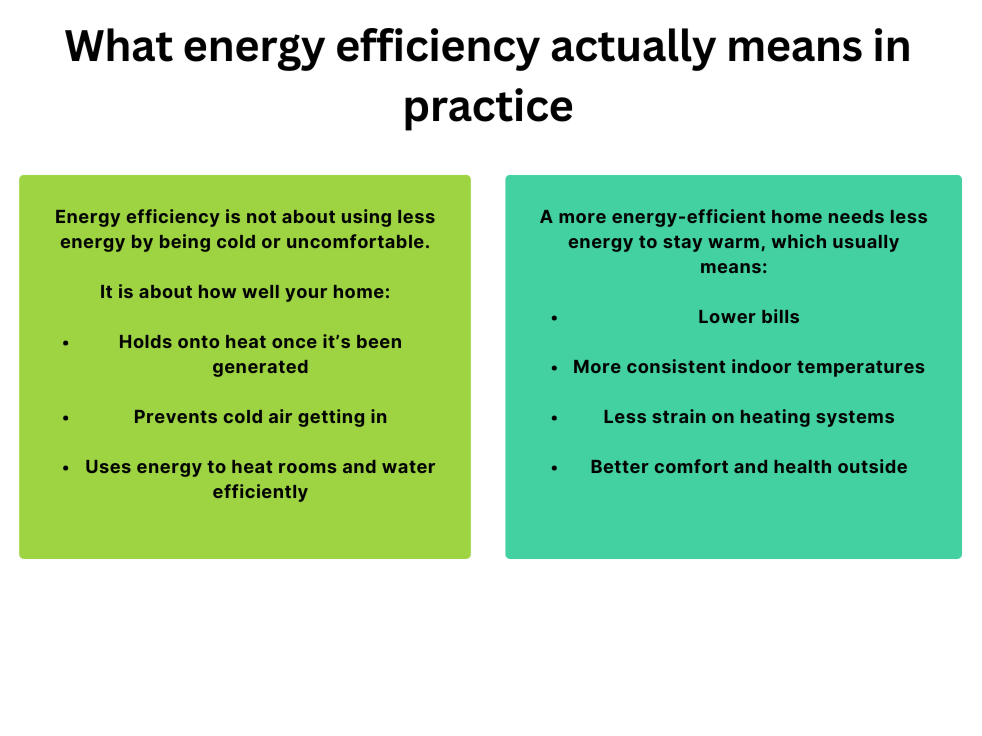
Energy efficiency is about how well your home keeps heat in and cold out.
It plays a major role in comfort, health and how much you pay to run your home.
Improving your home’s efficiency - a simple approach
You do not need to do everything at once.
A practical approach is:
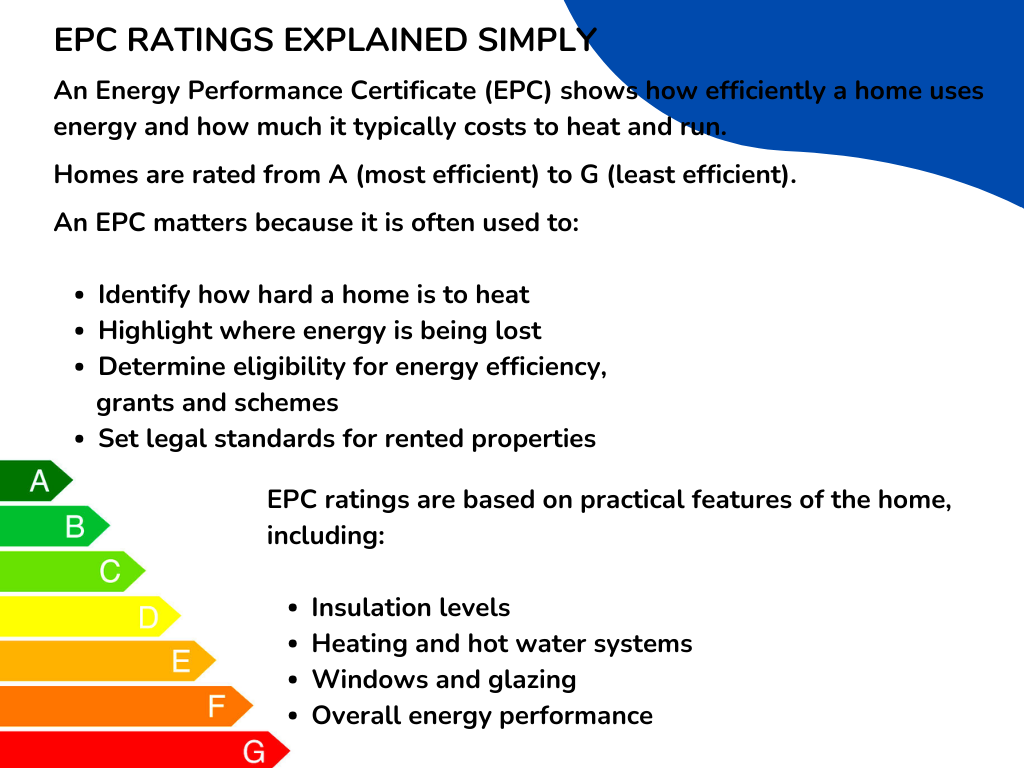
Understand your property and EPC rating
Identify where heat is being lost
Check what schemes or funding apply
Apply through the correct route
Improve gradually as opportunities become available
Small changes still make a meaningful difference.
Where homes typically lose heat
Poor air sealing - gaps around pipes, vents and fittings
Roofs and lofts - warm air rises and escapes easily
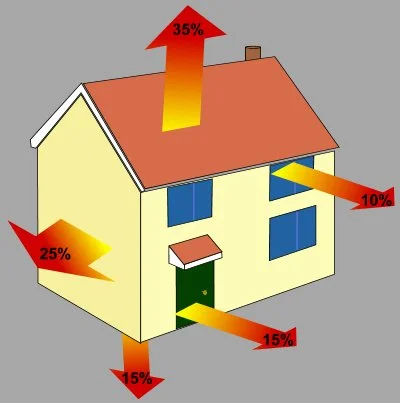
Walls - especially solid or uninsulated cavity walls
Floors - particularly suspended timber floors
Windows and doors - older glazing and draughts
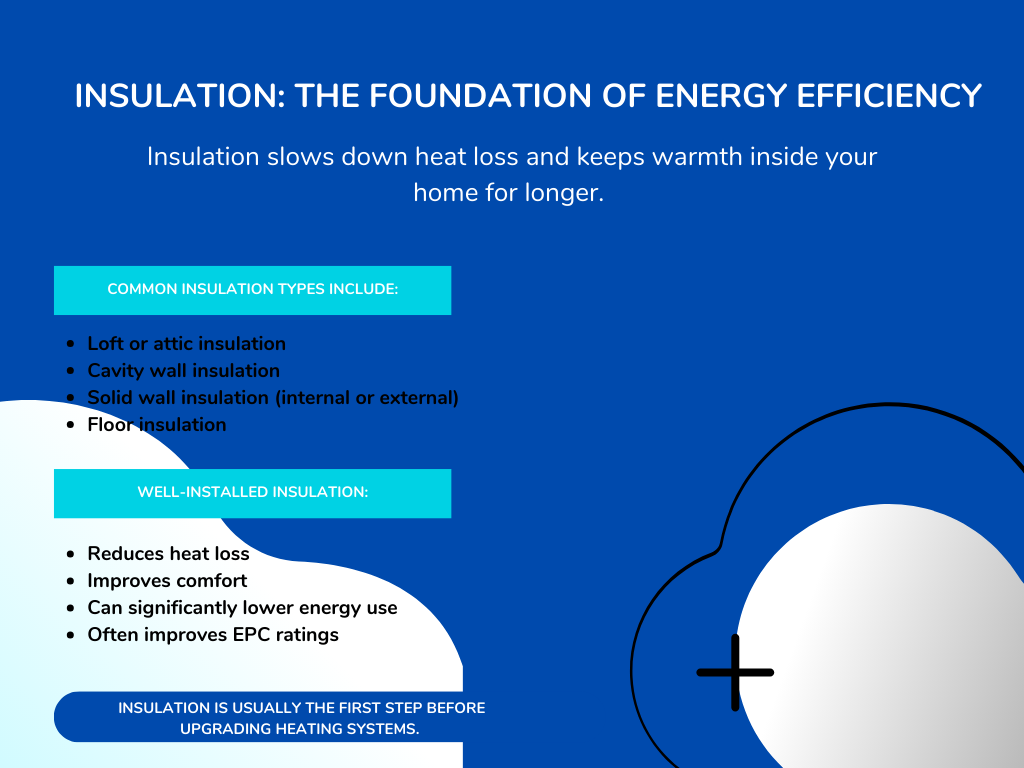
Many insulation measures are delivered through the Energy Company Obligation (ECO), which requires energy suppliers to fund improvement in eligbile hones.
Health and comfort impacts
Energy efficiency is not just about the money you can save.
Poorly insulated or inefficient homes are linked to:
Cold indoor temperatures
Damp and condensation
Respiratory and circulatory health issues
Increased strain on vulnerable households
Improving efficiency helps create warmer, more stable and healthier living conditions.
Energy efficiency and support schemes
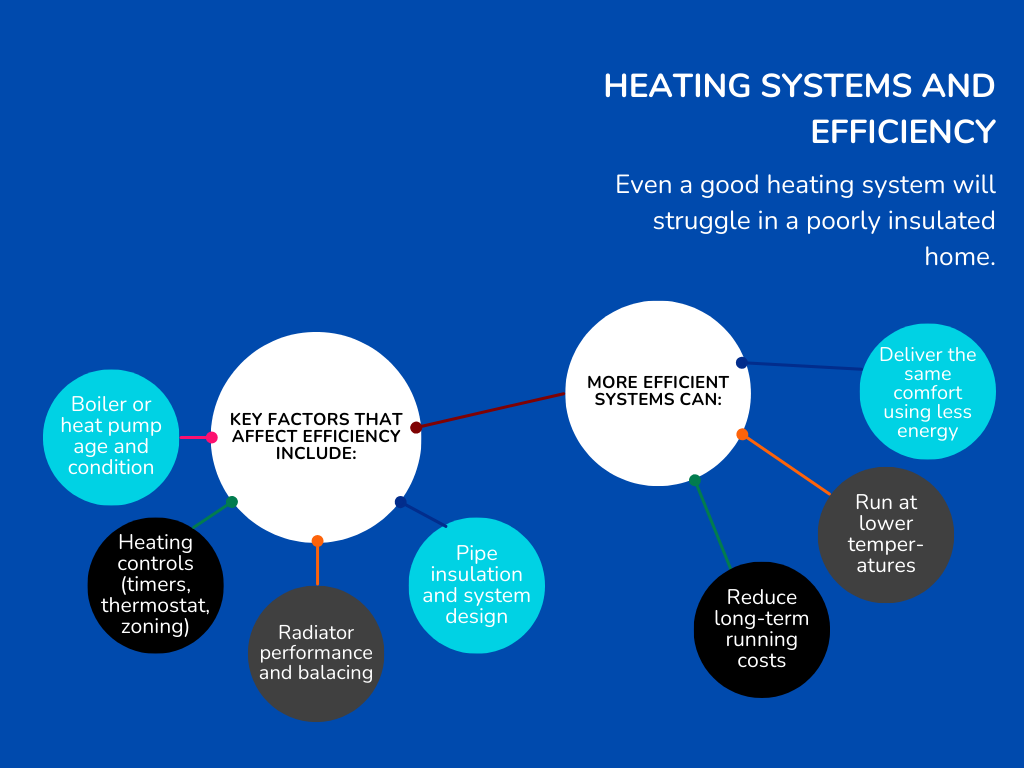
Many UK support schemes focus on improving the efficiency of homes rather than providing direct bill payments. The UK government sets out national energy efficiancy schemes, including insulation and heating support, through its official guidance.
These schemes exist because reducing heat loss and improving heating systems lowers long-term energy costs and reduces fuel poverty.
What support energy efficiency schemes provide
Energy efficiency schemes typically fund or part-fund:
Insulation improvements
(loft insulation, cavity wall insulation, and in some cases solid wall insulation)UK Government – Energy Efficiency Schemes
This is the official overview of national schemes including ECO, and links to claim or find installers:
Heating system improvements
(such as boiler upgrades, heating controls, or low-carbon heating where appropriate)Energy efficiency measures linked to health or vulnerability
(where cold or damp homes affect health outcomes)Local authority–led home improvement programmes
(targeted at inefficient housing stock within specific council areas)
These measures are provided as physical improvements to the home, not cash payments.
How eligibility is determined
Eligibility for energy efficiency support is based on defined criteria, not discretion.
Most schemes assess eligibility using a combination of:
Property energy efficiency
EPC rating, usually prioritising homes rated D, E, F or GHousehold circumstances
Income level, means-tested benefits, or health vulnerabilityProperty type and construction
Age of the building, wall type, heating system, and insulation statusLocation
Local authority priorities and regional scheme funding
What this means in practice
Energy efficiency support is rules-based
Funding is targeted at inefficient homes
Support is delivered through improvements, not bill credits
Availability varies by property and location, not guesswork
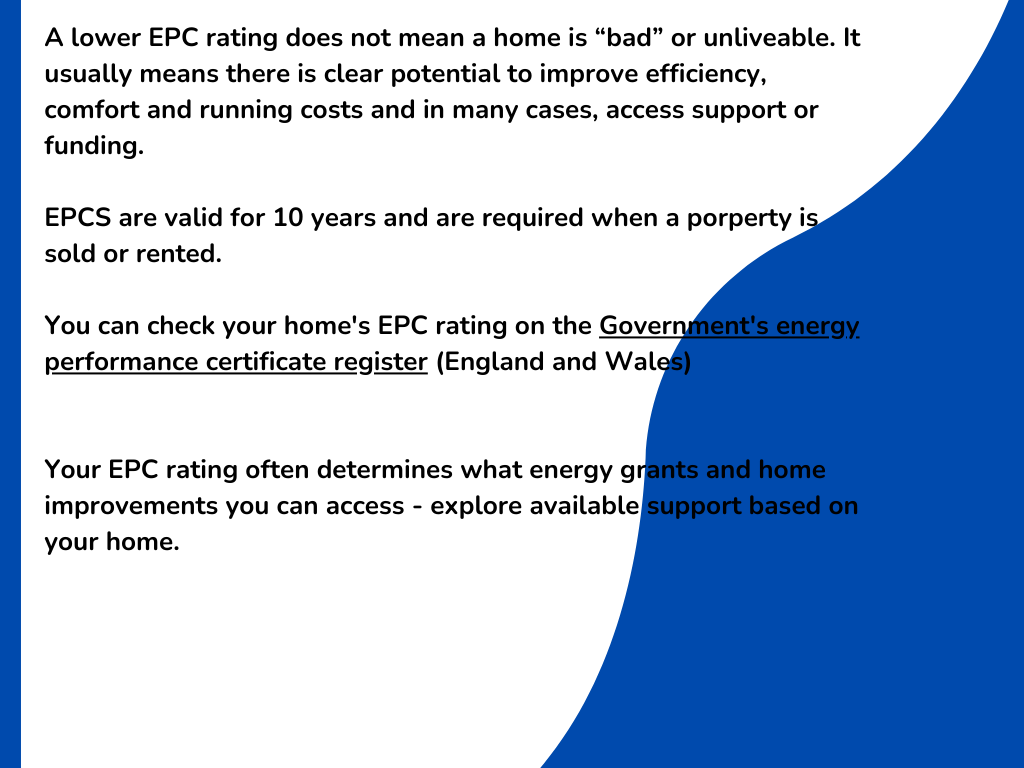
This is why EPC ratings and property details play such a central role in grant and scheme eligibility.
More options
-

Household Support Fund
-

Discretionary Housing Payment
-

Health-linked energy support
-
Energy supplier trust funds