
Savings and Maximising Benefit
Solar panels reduce electricity bills by lowering the amount of power a household needs to buy from the grid. The biggest savings usually come from using electricity while it is being generated, with battery storage and export payments adding further value depending on how the system is used.
Self-Use Drives SavingsSEG Adds Extra Value
BATTERIES ADD FLEXIBILITY
Returns Vary By Household
Solar panels do not remove electricity bills completely.
Instead, they reduce the amount of electricity a household needs to buy from the grid by generating power during daylight hours.
How much a household benefits depends less on the panels themselves and more on how the electricity is used once it is generated.
NUVOE explains what creates savings, what limits them and what households should understand before making assumptions about payback or returns.
Solar panels generate electricity during the day. When electricity is used at the same time it is generated, the household avoids buying that electricity from the grid.
This is where most savings come from.
Savings usually come from:
Using solar electricity during the day instead of grid electricity
Reducing peak electricity purchases
Exporting unused electricity back to the grid through SEG payments
The more electricity used while panels are generating, the greater the benefit.

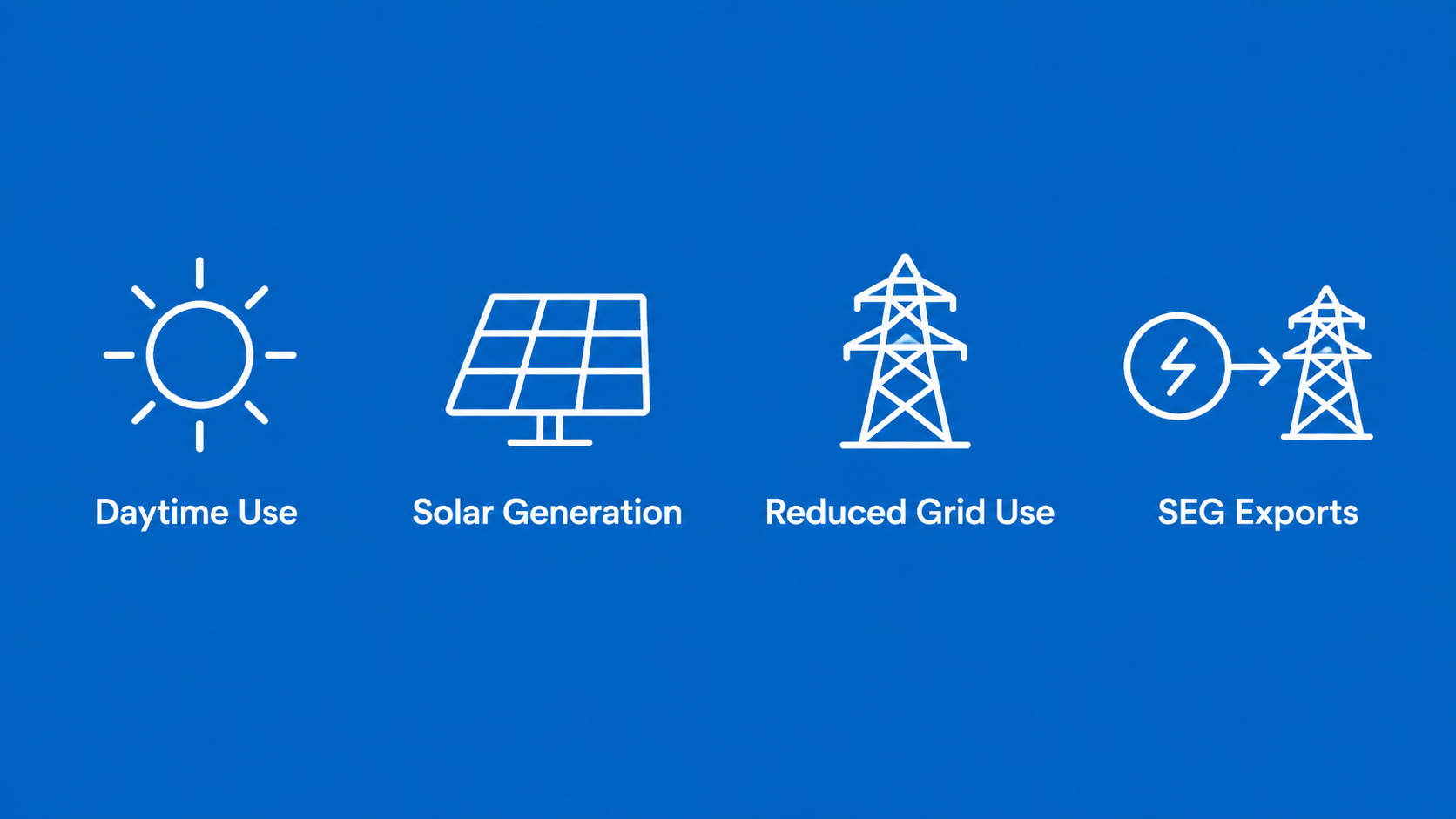
How solar actually saves money
A solar battery allows you to store electricity produced by your solar panels and use it later or, in some cases, sell it back to the grid.The Eco Experts estimate the average price to be around £4,500.The price you're paid for each unit of energy you export to the grid is usually much lower than the price you pay your supplier for electricity. So, economically, it makes more sense to store the solar energy and use it yourself.
Solar batteries vary in price, depending on the type and storage capacity (how much energy it can hold). The cheapest start at around £1,500, but can be as much as £10,000 – though on average, you'll typically pay around £5,000 for a standard battery system. when getting a solar battery, you'll have to factor in installation fees and the cost of adding an inverter to your system.
You could save up to £350 a year on your bills by using what you generate First and foremost, you can use the electricity your panels generate, and so reduce your bills. Savings depend on system size, your electricity use and whether you're at home during the day to use the energy you're producing. But based on Energy Saving Trust estimates, a typical household with a 3.5 kilowatt-peak system can knock between £190 and £350 a year off bills at current Energy Price Cap rates.

Solar batteries and savings

Maximise your savings, use most of your electricity while you're generating it. To get the most value from solar, use as much of your own generation as possible while it is being produced. The less electricity you need to buy from the grid during the day, the stronger the saving tends to be. Export payments can add value too, but they are usually a secondary part of the picture rather than the main source of savings.
Generate and use