

Choosing a Trusted Solar Installer
How to identify reputable solar installers, check the right certifications and compare quotes confidently before agreeing to work on your home.
MCS CertificationConsumer Protection
QUOTE COMPARISON
AVOID RED FLAGS
Quick Installer Credibility Check
Before requesting a quote, check that the installer meets the following basic requirements.
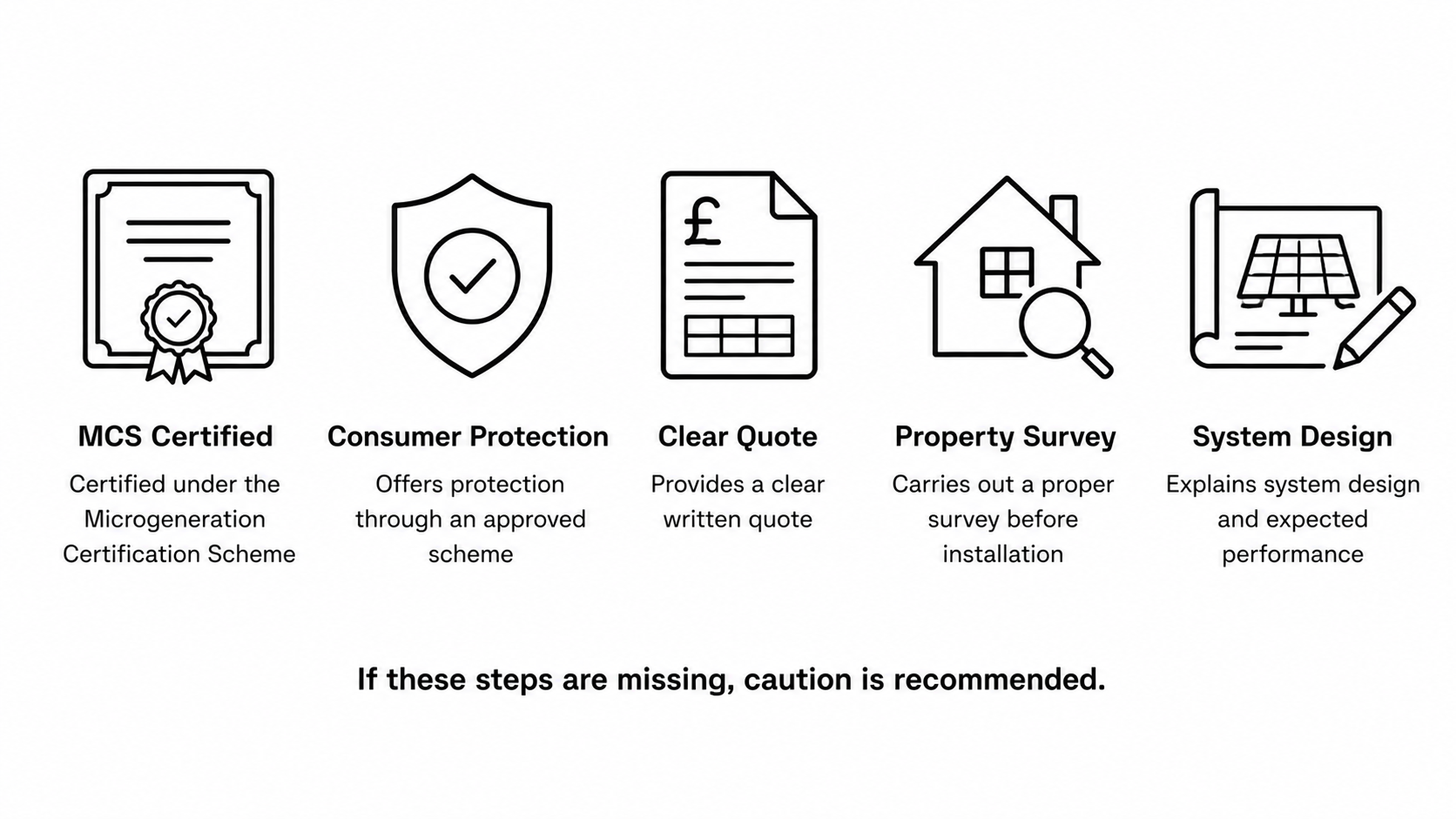
Installing solar panels is a long-term investment, so choosing a qualified installer is essential.
The quality of installation affects:
system performance
safety
eligibility for export payments
warranty protection
This page explains how to identify legitimate installers, what certifications matter and what questions to ask before agreeing to an installation.
Understanding these steps helps households avoid poor installations and misleading offers.
Understanding these factors helps households set realistic expectations before exploring installation or funding options.

Choosing a Trusted Solar Installer
The Microgeneration Certification Scheme (MCS) is the main accreditation system for renewable energy installers in the UK.
Solar installers must normally be MCS certified in order for households to:
qualify for the Smart Export Guarantee (SEG)
ensure installations meet recognised technical standards
access some government support schemes
MCS certification means installers follow approved design and installation standards.
Households can search the official MCS installer database here

Microgeneration Certification Scheme (MCS)

Most reputable installers also belong to consumer protection schemes that protect customers if problems arise.
These schemes can provide:
deposit protection
workmanship warranties
dispute resolution
insurance-backed guarantees
Common protection schemes include:
HIES (Home Insulation & Energy Systems)
RECC (Renewable Energy Consumer Code)
Installers should normally belong to one of these schemes.
Consumer protection and warranties
Before choosing an installer, it is recommended to obtain multiple quotes.
This helps households compare:
system size
estimated generation
installation cost
warranty terms
expected savings
Most installers will conduct a site survey before confirming system design.
Quotes should clearly explain:
• number of panels
• inverter type
• expected electricity generation
• installation timeline
Getting and comparing solar installation quotes
Be cautious if an installer:
❌ promises “free solar for everyone”
❌ pressures you to sign quickly
❌ refuses to provide written documentation
❌ cannot confirm MCS certification
❌ offers unrealistic savings guarantees
Solar installations require proper assessment and documentation.
Households should take time to understand the system before agreeing to installation.
Warning signs and solar scams to watch for
Before accepting a quote, households may wish to ask:
• Is the installation MCS certified?
• What warranties are provided for panels and inverter?
• What generation estimate does the system provide?
• How will the system be registered for export payments?
• What aftercare or monitoring is provided?
Clear answers to these questions help confirm installer credibility.
Questions worth asking installers
A standard installation process usually follows these steps:
1️⃣ Initial consultation and quote
2️⃣ Property survey and system design
3️⃣ Installation day (typically 1–2 days)
4️⃣ Electrical connection and testing
5️⃣ System certification and documentation
Once complete, installers provide certification needed for export tariffs.
Typical solar installation process
Once installation is completed, households should normally receive:
✔ MCS certificate
✔ Electrical installation certificate
✔ Warranty documents
✔ System performance estimate
✔ Export tariff registration details
These documents confirm the installation meets recognised standards.
Documents you should receive after installation
Choosing an Installer With Confidence
Choosing a qualified installer helps ensure solar systems operate safely, efficiently and in line with national standards.
Accreditation, clear documentation and consumer protection schemes are key indicators of installer credibility.
NUVOE explains these steps so households can approach installation decisions with confidence and avoid unnecessary risks.
OFFICIAL SOURCES
Microgeneration Certification Scheme