
Home Suitability
Understanding whether a property is suitable for solar panels, from roof direction and usable space to sunlight exposure, structure and roof condition.
Roof DirectionSunlight Exposure
USABLE ROOF SPACE
Roof Condition
Quick Suitability Check
-
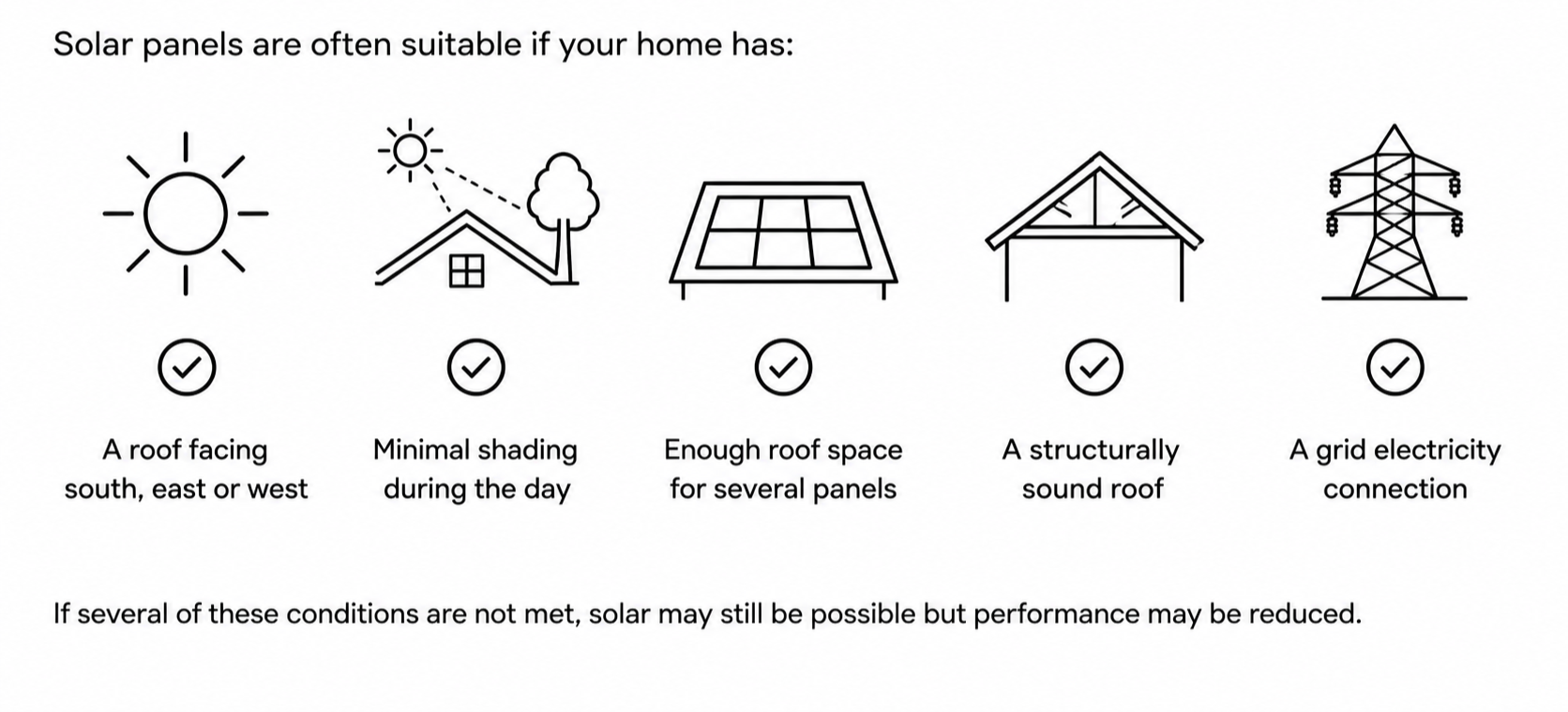
Solar panels work best when certain property conditions are met. These include roof direction, available space, sunlight exposure and structural suitability.
Many homes in the UK are suitable for solar installation, but not every property will benefit in the same way.
This page explains the main factors installers assess when determining whether solar panels are appropriate for a property.
Understanding these factors helps households set realistic expectations before exploring installation or funding options.
-
In the UK, solar panels generate the most electricity when they receive consistent daylight throughout the day.
The most effective roof orientations are typically:
• South-facing roofs (highest generation)
• East-facing roofs (good morning generation)
• West-facing roofs (good afternoon generation)
North-facing roofs usually produce significantly less electricity and are rarely recommended unless combined with specialist system design.
However, modern systems can still perform well on east-west roofs because they capture sunlight at different times of the day.
-
A typical domestic solar panel is around 1.7m by 1m.
Most homes require between:
• 8 and 14 panels
• covering roughly 15–25 square metres
However, the exact number depends on:
• roof layout
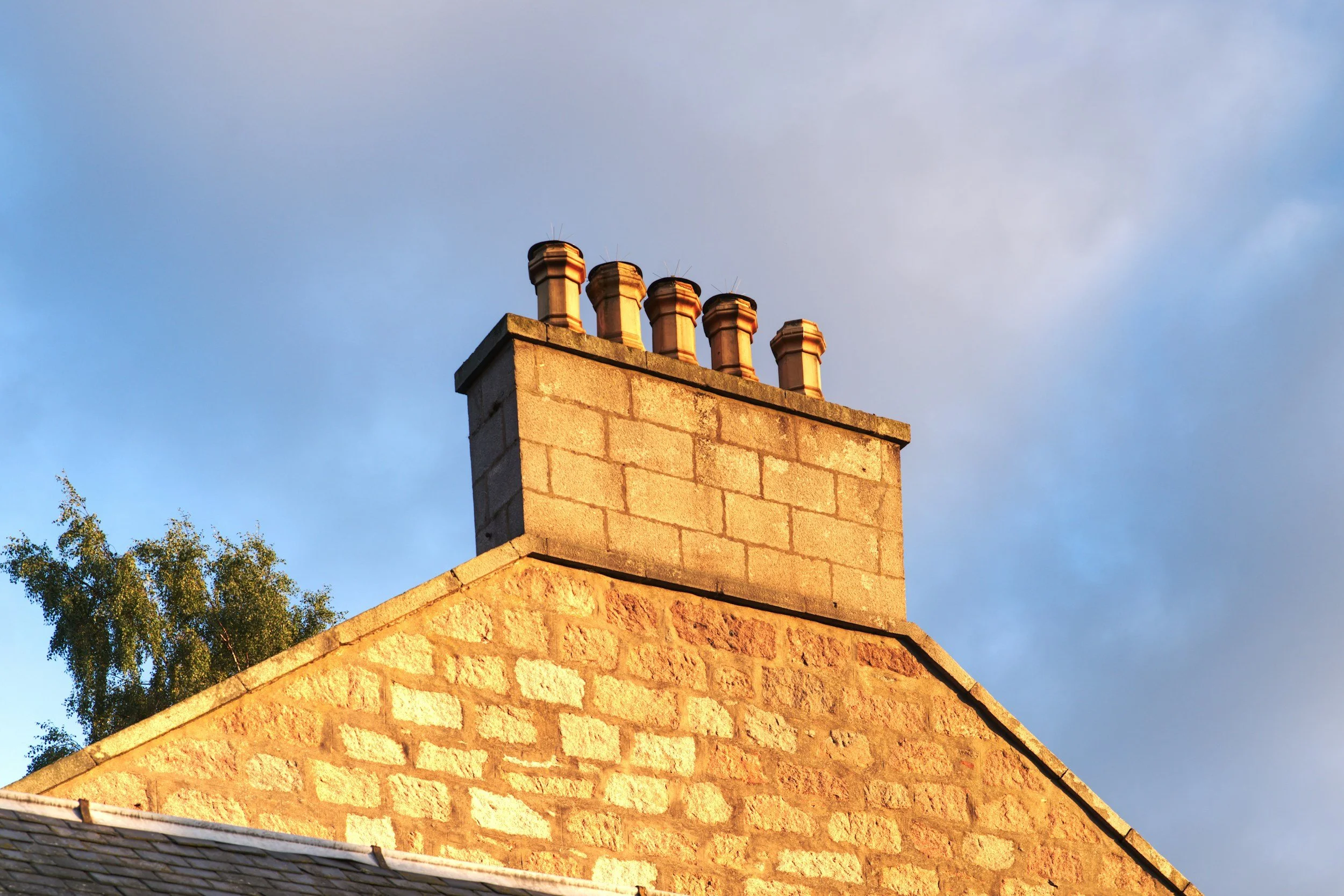
• chimney placement
• skylights or dormer windows
• system size required
Even smaller roofs can sometimes support partial systems.
-
Solar panels last 20–30 years, so the roof beneath them must also be structurally sound.
Installers will normally check:
• roof age
• tile condition
• structural strength
• rafters and mounting points
If a roof requires repairs or replacement, this is normally done before installation.
This ensures the solar system can remain in place for its full lifespan.
-
Solar panels perform best when exposed to clear daylight.
Common sources of shading include:
• tall trees
• neighbouring buildings
• chimneys
• dormer windows
• satellite dishes
Even partial shading can reduce the output of a solar panel system.
Installers often perform shading analysis during site surveys to assess potential impact.
-
In most cases, solar panels on residential roofs are considered permitted development in England.
This means planning permission is usually not required.
However, permission may be needed if:
• the property is in a conservation area
• the building is listed
• panels extend beyond roof boundaries
• local planning restrictions apply
-
Solar panels can usually be installed on:
• owner-occupied homes
• privately rented homes (with landlord permission)
For rented properties, tenants normally require written consent from the landlord before installation.
Leasehold properties may also require approval from the freeholder or building management.
-
Solar panels may be less suitable where:
• roofs face primarily north
• heavy shading occurs throughout the day
• roof space is extremely limited
• structural issues exist
• the property is temporary or scheduled for redevelopment
In these cases, other energy efficiency improvements may deliver greater benefits.
Understanding suitability early helps households avoid unnecessary installation costs.
-
Solar panels can be effective for many homes in the UK, but performance depends heavily on property characteristics.
Assessing roof orientation, shading, available space and structural condition helps determine whether solar will deliver meaningful benefits.
NUVOE explains these factors so households can understand suitability before exploring installation, grants or payment options.
OFFICIAL SOURCES
Further Gudiance
Further guidance
For households checking whether a property is suitable for solar, the links below cover planning rules, building requirements and certified installers.
Planning permission
Building regulations
Find an MCS certified installer